
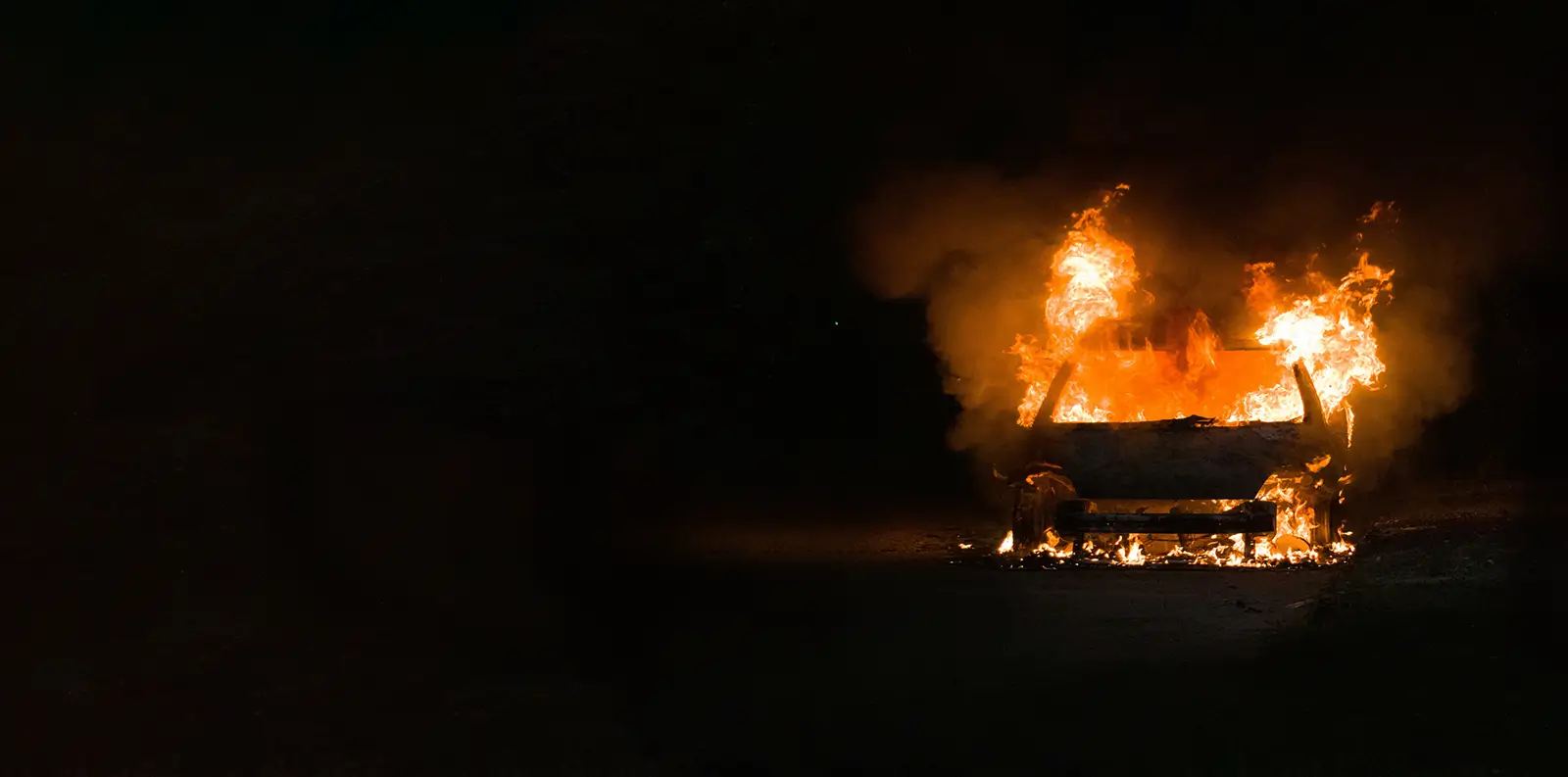
Americans Affected
By Settler
Violence
“At its core, this is not just a dispute about land. It is about whether the United States will stand behind the rights of its own citizens.”
Volunteers with CPAO have collected the testimonies of individual Americans whose families and property have been directly affected by settler violence. Some of their stories of attacks are below, along with information on the places they occurred. Maps showing the locations of these attacks are available here. (Please note that this list does not include at least ten Americans killed by Israeli soldiers.)
- Al-Mazra’a ash-Sharqiya
- Beit Sahour
- Birzeit
- Khirbet Humsa
- Mugheyer
- Mukhmas
- Qusra
- Silwad
- Sinjil
- Tayasir
- Taybeh
- Turmas Ayya
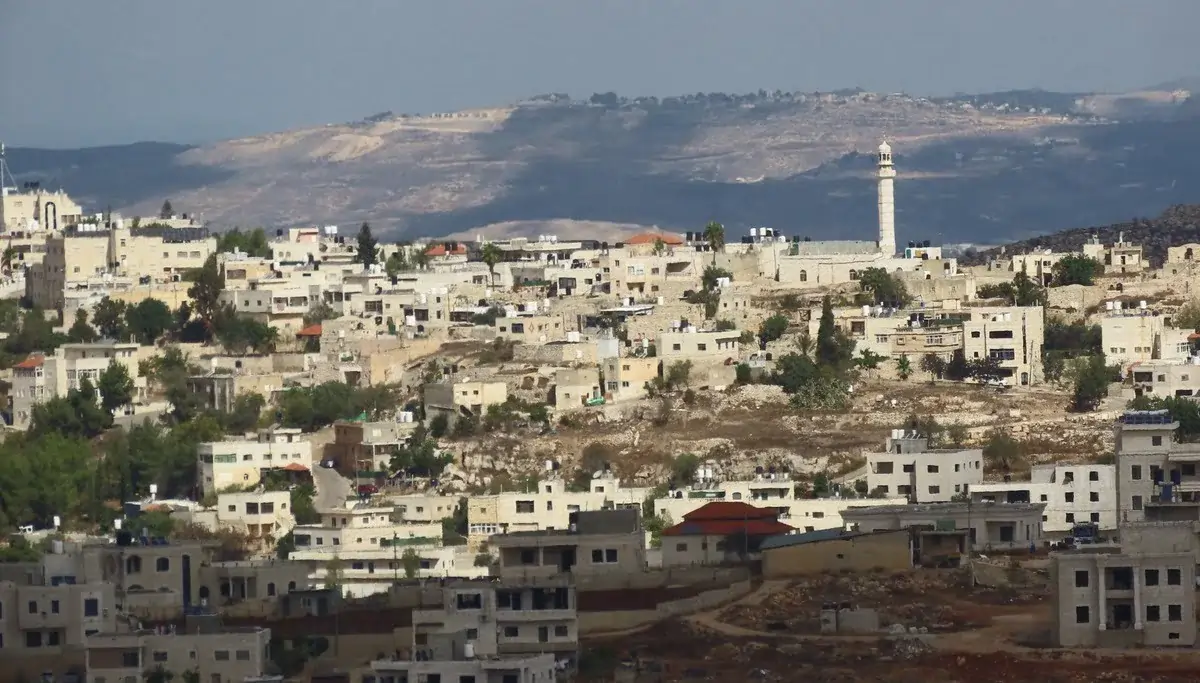
יעקב - Own work, cropped CC0
Al Mazra’a ash Sharqiya is a beautiful hilltop town northeast of Ramallah, where many
Palestinians in the diaspora, including American citizens, have built beautiful homes.
Some families have deep historic ties to the area.
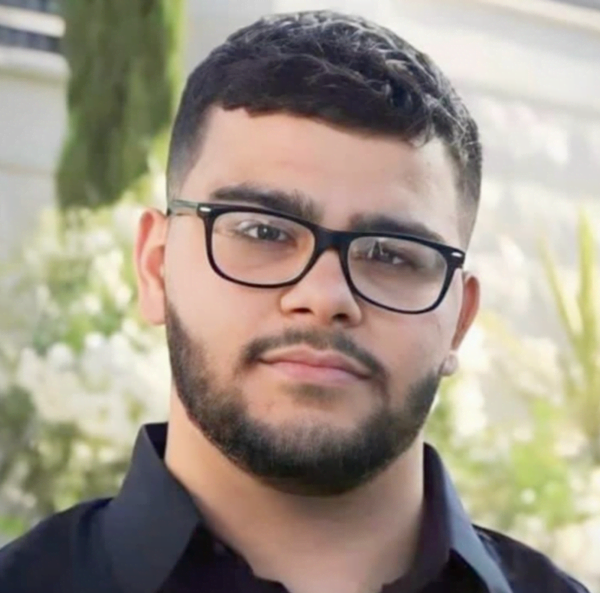 American killed -
American teenager Tawfic Abdel Jabbar was born and
raised in Gretna, Louisiana. He frequently accompanied his parents and siblings to their
ancestral home in the West Bank village of Al-Mazra'a ash-Sharqiya, where the Abdel
Jabbar family had lived for over 200 years. Both of his parents had grown up in the village
and wanted their children to connect with relatives and learn about Palestinian culture.
Tawfiq was in his senior year of high school and was studying remotely in January 2024,
when he was shot by an Israeli settler, leading to his death. An
interview with the family
provides more details, which are summarized below.
American killed -
American teenager Tawfic Abdel Jabbar was born and
raised in Gretna, Louisiana. He frequently accompanied his parents and siblings to their
ancestral home in the West Bank village of Al-Mazra'a ash-Sharqiya, where the Abdel
Jabbar family had lived for over 200 years. Both of his parents had grown up in the village
and wanted their children to connect with relatives and learn about Palestinian culture.
Tawfiq was in his senior year of high school and was studying remotely in January 2024,
when he was shot by an Israeli settler, leading to his death. An
interview with the family
provides more details, which are summarized below.
On January 19, 2024, Tawfic was driving on Highway 60 in
the West Bank on his way to a picnic when an Israeli settler
fired at his vehicle. As Tawfiq tried to drive away, an Israeli
soldier and an off-duty police officer also fired on the car. After
the vehicle overturned, Israeli forces prevented emergency
responders from reaching the scene for at least 15 minutes
and then prevented a Palestinian ambulance from passing.
The ambulance was forced to take a detour to the hospital,
where Tawfiq was pronounced dead. Tawfiq was widely loved
and admired in his Louisiana hometown. In late January, over
100 cars formed a motorcade in his memory along a New
Orleans highway.
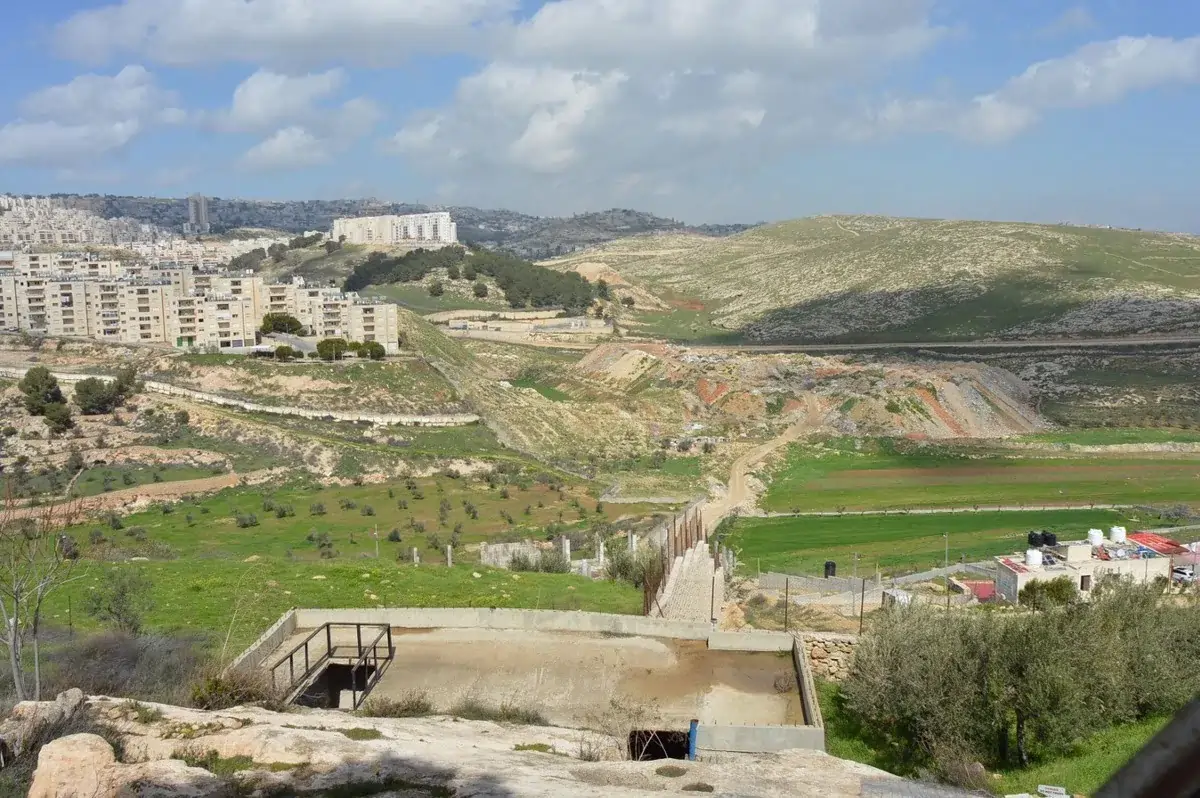
View from Beit Sahour of Har Homa settlement and new settlement site by Beth DiCocco, New England Conference UMC
Beit Sahour is part of the Bethlehem Governate, built on the site known as the
Shepherd’s Field. It includes the hillside where, according to the Gospel of Luke, the
news of Jesus’s birth was first proclaimed. It is one of the last Christian-majority towns in
the West Bank. For years, the large Israeli settlement of Har Homa has dominated the
view to the east of the town, transforming a hill where shepherds grazed their flocks into
a warren of cement buildings occupied by Israelis. Now another illegal settlement is being
built.
Land confiscated - Rev. Dr. Fares Abraham of
Orlando, FL, is an American pastor
and native of Beit Sahour. In a December 2025 interview, he said: “In recent weeks, a
new illegal Israeli settlement outpost has been established on the edge of Beit Sahour.
Caravans and construction equipment have appeared on a site the town had hoped to
use for a children’s hospital, cultural center, and public spaces – projects supported by
international donors and meant to strengthen a Christian community that has endured
for centuries. Instead, those plans are now suspended, and the families who live nearby
are bracing for uncertainty, rising tension, and the real possibility of further
displacement.”
Family affected - The Abusaada Family of Houston
owns land in the town of Beit
Sahour. The land has been in their family for generations. Recently, illegal settlers have
taken over a hilltop location adjacent to their property and have begun construction of
yet another illegal settlement. The hill, known as Ush Ghrab, is a site of profound
historical, religious, and cultural significance to Christians around the world. It is
traditionally recognized as the place where, according to the Gospel of Luke, the angels
announced the birth of Jesus Christ to the shepherds.
The family writes that “Beyond the physical transformation of the landscape, such
expansion places additional pressure on already fragile Palestinian Christian
communities and directly affects daily life in the following ways: Building this outpost
makes it difficult for local Christians to commute between Beit Sahour and nearby cities,
restricting normal movement and access to work, churches, and services. Continuous
construction in this area threatens safety and stability. The presence of this settlement
creates obstacles for students trying to access the American School located near this
area, affecting their ability to receive education without disruption. The continuation of
this project risks the taking of additional lands belonging to local Christian families,
further reducing their already limited space for natural growth and livelihood.”
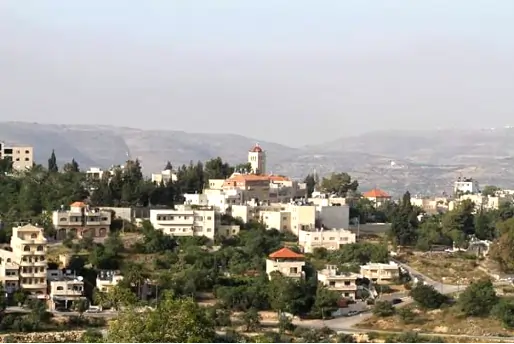
Birzeit is historically a Christian town north of Ramallah in the West Bank. It dates back
to Roman and Byzantine times and today is home to Birzeit University. It has a number
of residents who are dual US and Palestinian citizens.
The expansion of Israeli settlements, such as the one at Atara (Ataret), has significantly
impacted Birzeit, primarily through the restriction of movement, land confiscation, and
increased military presence in the area.
A video from Middle East Eye (MEI) shows settlers setting fire to cars in the town. See video here. Below are
screenshots from that
video used with MEI’s permission.
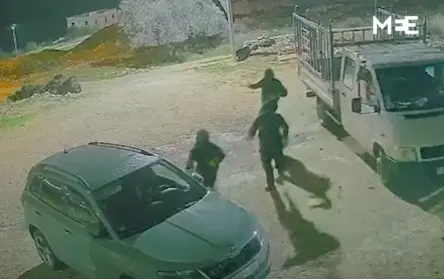
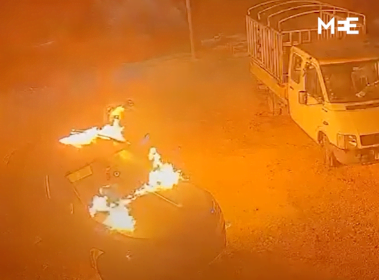
Screenshots from video by Middle East Eye show settlers setting fire to cars in Birzeit. Used with permission.
American beaten, robbed - Below is an account of a settler attack by a Palestinian American citizen from Birzeit (The names have been changed to protect the family.)
“On Saturday, January 24, 2026, a settler entered the land surrounding Chad’s
family home, bringing his sheep with him. The family’s dog immediately barked at
the intruders. Chad’s mother
went to check the land and discovered the settler grazing his sheep among their
olive trees. She asked him to leave, as the sheep had eaten the leaves. Hearing
his mother’s voice, Chad and his cousin rushed to see what was happening. By
the time they arrived, more settlers had joined the first one. The situation
escalated quickly, and in the chaos, the settler threw a stone at Chad’s mother’s
head, causing a severe cut to her skull. Chad stepped in to defend his mother,
tending to her injuries while also treating his own.
While Chad was at the hospital helping his mother recover, the same settler returned to their
home,
this time accompanied by an Israeli military patrol. They aggressively approached the house. When
they noticed that the family was Christian, a soldier threatened them with his weapon, and the
settler verbally abused the Virgin Mary and Jesus Christ. The family was confined inside the
house, unable to receive any help.
During this time, Chad’s brother Etan and his cousin Eamon were beaten, and
his cousins Norm and Eamon were arrested. Chad was also threatened over the
phone: if he did not surrender, the authorities would arrest the entire family.
During the detention of the household members, several of Chad’s car paint
supplies, which were his source of income, were also stolen. When Chad
returned from the hospital, he surrendered himself to the authorities. During the
arrest, he was assaulted on his hands, provoked, and humiliated. He was held
in detention for four days.
On Tuesday, January 27, 2026, while Chad was still in detention and the rest of
the family was out of the house—his mother continuing her medical treatment
and other family members at work —the settlers exploited the empty house and
stole from the home storage. Among the stolen items were gas cylinders, tools
belonging to his brother Etan, a generator, electric motors, and other equipment.
On Monday, February 17, 2026, following continued provocations by settlers on
the neighbors’ lands, the neighbors went to remove a settler who was grazing
his sheep on their property. The responsible settler came with the army and
accused Chad of gathering the people of Birzeit to expel him. The army then
detained Chad at the Atara checkpoint tower for four hours, during which he was
tortured. As a result, Chad became the accused in the eyes of the settlers,
simply because he had defended his mother.
Ultimately, the judge acquitted Chad, recognizing that he had acted in defense
of his mother against an immediate threat. This story is a testament to courage,
family solidarity, and standing up against injustice in the face of danger.”
See Statement to Congress
from representatives of Birzeit
Khirbet Humsa is a Bedouin hamlet in the northern part of the Jordan Valley, one of three tiny villages that have been repeatedly demolished by the Israeli military. Israelis have destroyed electricity and water supplies and declared the area a live fire zone. Yet residents have no other home and continue to return. Israeli authorities claim they have offered them other land, but the residents say the land in question is far away and belongs to other Palestinian families.
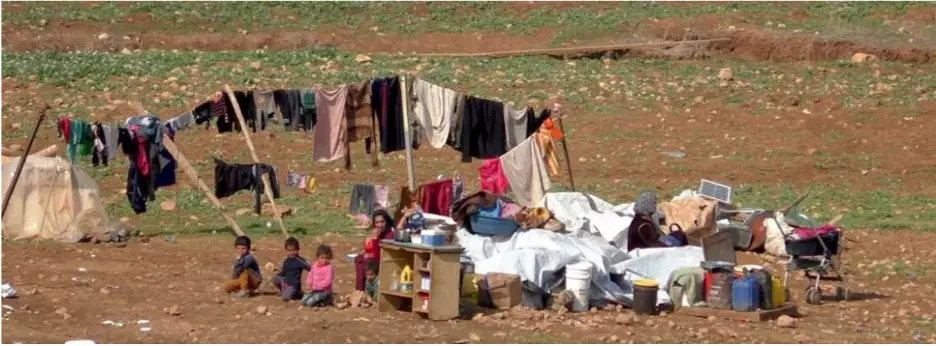
Family whose home was destroyed in Khirbet Humsa - Photo from B’tselem used with permission.
American beaten, robbed - On March 12th, 2026, a 24-year-old American named Ava Lang was part of a group visiting the Bedouin village of Khirbet Humsa when illegal settlers descended on the village and attacked them along with Palestinian residents. Ava told the New York Times she was beaten and had her watch, rings, wallet and passport stolen. During the attack, the settlers brutally assaulted a young Palestinian father, tying him up and sexually abusing him before stealing the family’s 400 sheep as well as wedding rings and other jewelry, cell phones, cash, and identification papers. The attack was covered in a New York Times article on March 18th. A more detailed description by Ms. Lang of the brutal attack is available here, and it was covered and confirmed in The Times of Israel.
Mughayer is an agricultural village in a mountainous area northeast of Ramallah and southeast of Nablus. It has suffered attacks from illegal settlers since at least 2009, when hundreds of its olive trees were cut. On May 18, Hilltop Youth settlers, known for their violent extremism, built an illegal outpost 100 meters from the closest house in the village. As a result, 150 residents of the village were forced to leave their homes.
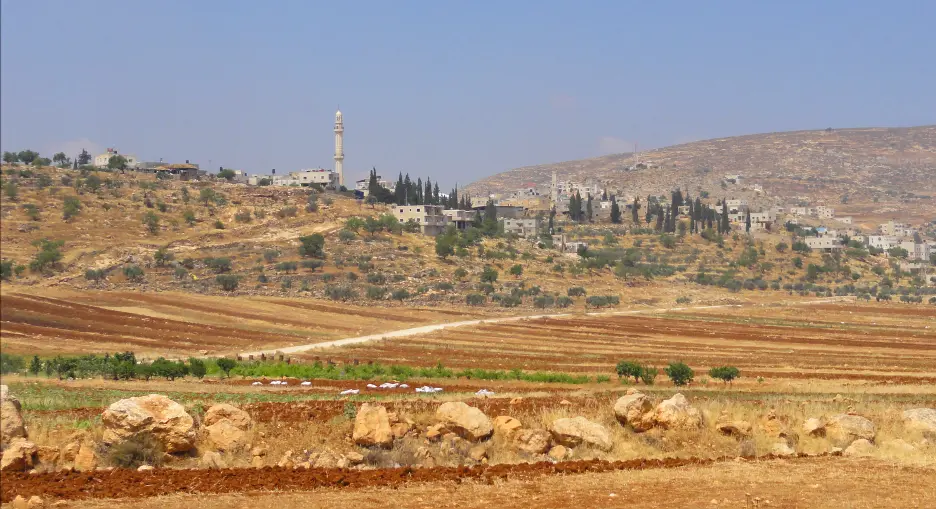
Photo by Mujaddara, CC by SA 3.0, cropped
Orchard destroyed -
Jamil and Motaz Nassan are American citizens from the
Chicago area who own land in Mugheyer. For years, they have been dealing with
violence from settlers seeking to drive them from land that has been in their family for
generations. 140 olive trees that provided income for the family and the village have
been cut down. The Times of Israel published an article on the vandalism in 2012,
estimating that the loss for one season from oil that would have been produced was
8400 shekels, or about $2150.
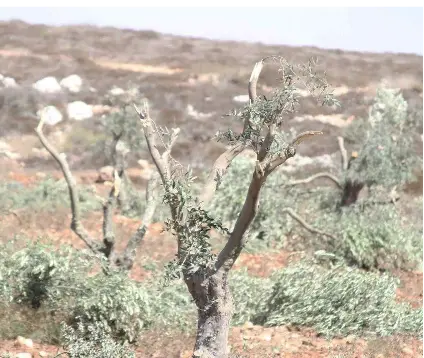
Ruined olive trees in Mugheyer
The settler vandalism has destroyed the
Nassans’ livelihood and sent the
message that there is no future for their
families in the land of their ancestors.
The settlers come from an outpost called
Adei Ad, and Jamil Nassan said one of
them had fire-bombed his car several
years ago.
Settler attacks on the village have continued in 2026. In January, settlers stormed
grazing land and opened fire in the area, while constantly harassing residents. Between
Feb 21–22, two Palestinians were shot and wounded during a settler raid on farmland;
settlers stormed a compound, assaulted residents, and shot two people; and village
families suffered property damage and attempted assaults. On March 3, 2026, a
Palestinian man was seriously injured after being beaten by settlers near the village
entrance. Around the same time, settlers reportedly blocked the village’s only entrance,
removed flags, and attacked a shepherd. A day later, a 55-year-old man was beaten
with a stick at a checkpoint set up by settlers, requiring medical treatment. A cousin of
Chicago resident Motaz Nassan was detained for 24 hours at the checkpoint.
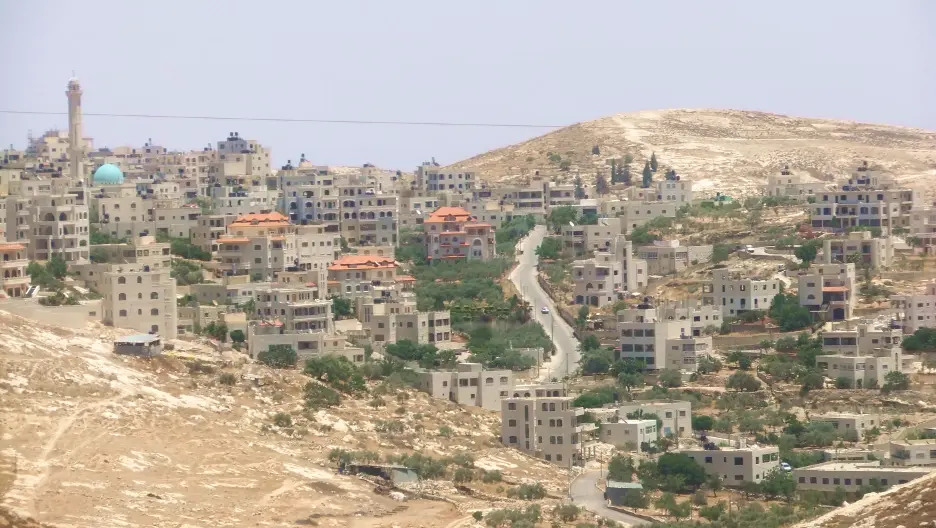
יעקב - Own work CC BY-SA 3.0, cropped
Mukhmas is a Palestinian village in the Jerusalem Governorate, located northeast of
Jerusalem, in the center of the West Bank. Israelis have confiscated land in Mukhmas
for its military bases, roads, and Israeli settlements, including Sha'ar
Binyamin and Ma'ale Mikhmas. It has been subject to attacks from violent Israeli
settlers
for years, and has seen hundreds of its olive trees burned and uprooted. An Israeli
journalist has reported that Israeli security personnel have aided settlers in these
attacks.
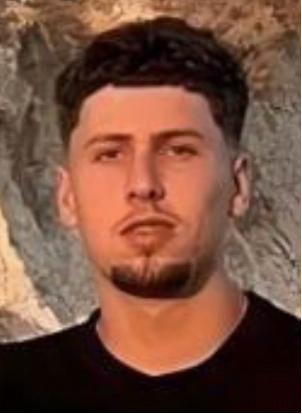 American killed -
 Nasrallah Abu Siyam, age 19, was a
US citizen born in Philadelphia. He was killed by Israeli
settlers in the village of Mukhmas (east of Ramallah) on
Feb. 18, 2026, while he and other villagers were attempting
to stop armed settlers from stealing their livestock.
Nasrallah was shot during a confrontation where settlers
threw rocks and later opened fire. He is the third
American killed by settlers in less than a year. His family
gave several moving statements at a press conference
on March 6th, calling for a US government investigation and punishment for the perpetrators.
Pennsylvania Governor Josh Shapiro sent a letter to the Department of Justice asking for
an investigation into the killing. The Philadelphia City Council unanimously passed a
resolution to honor Abu Siyam’s life and call for accountability. The young man has
relatives in New Jersey as well as Pennsylvania who have been deeply affected by his death.
American killed -
American killed - Nasrallah Abu Siyam, age 19, was a
US citizen born in Philadelphia. He was killed by Israeli
settlers in the village of Mukhmas (east of Ramallah) on
Feb. 18, 2026, while he and other villagers were attempting
to stop armed settlers from stealing their livestock.
Nasrallah was shot during a confrontation where settlers
threw rocks and later opened fire. He is the third
American killed by settlers in less than a year. His family
gave several moving statements at a press conference
on March 6th, calling for a US government investigation and punishment for the perpetrators.
Pennsylvania Governor Josh Shapiro sent a letter to the Department of Justice asking for
an investigation into the killing. The Philadelphia City Council unanimously passed a
resolution to honor Abu Siyam’s life and call for accountability. The young man has
relatives in New Jersey as well as Pennsylvania who have been deeply affected by his death.
Qusra is a small village near Nablus in the northern West Bank. Over the
years, the village has been repeatedly attacked by settlers. In 2011, they tried to set fire
to the mosque, and in recent years they have killed a number of residents, even killing a
father and son who were attending a funeral procession for another victim. For this
reason, young activists from the US have tried to provide a protective presence,
believing that settlers would be more reluctant to attack with Americans nearby. This is
not the case.
American attacked -
In July 2024, two young American people and a Palestinian were injured in an attack by illegal
Israeli settlers in the town of Qusra as they were helping Palestinian families plow and plant
their land. David Hummel lives in Berkeley, CA. The Palestinian Red Crescent Society said its
medics transferred two Americans to the hospital after they were assaulted by illegal settlers.
According to an article in CNN, “Three of the foreign victims, Vivi Chen, David Hummel, and Jedda,
who declined to give her last name, spoke with CNN about the attack from the hospital where they
were receiving treatment. They said they were accompanying Palestinian farmers to their olive
fields, which they haven’t been able to access since October because of attacks by Israeli
settlers.
Photos of David Hummel’s injuries are included in a detailed article by KQED News at https://www.kqed.org/news/12010352/apocalyptic-horror-movie-what-bay-area-volunteers-witnessed-gaza-west-bank.
At some point, the group was approached by several young settlers on a hill. ‘They sort
of stood there for a while, and then they came up to our group of international
volunteers, and they started hitting us with these thick wooden sticks almost like
baseball bats,’ Chen said.” (See her interview on the incident here.)
The CNN article continues: “Videos recorded by the activists show them trying to retreat
as they were attacked. One of them immediately falls to the ground, another tries to
shield himself with his arms as he is struck, and at least one is kicked in the leg and hit
with a rock hurled by an attacker. One woman fell down the hill and was also struck with
a rock. The settlers then ‘smashed her phone and she lost her documents and cards,’
Chen told CNN. ‘We were doing nothing,’ Hummel said. ‘Our hands were up and we were backing up and
trying to protect each other. So eventually, we tried to keep moving back because we had been hit
so many times.”
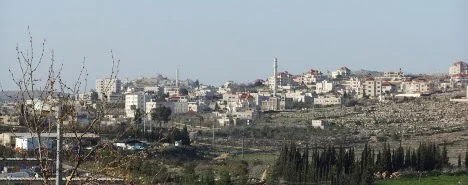
Silwad is a town perched on a hill 860 meters above sea level, northeast of
Ramallah, looking out over lush valleys. Its stone buildings and winding narrow streets
are home for at least part of the year to 1,000 American citizens, according to the
mayor. They come from Georgia, Indiana, Florida, and many other states.
 American killed -
Khamis Ayyad, a father of five and a former Chicago resident, was the second US
citizen to be killed
by settlers in the West Bank in July 2025. He died of smoke
inhalation after settlers set fire to homes and vehicles in the town.
American killed -
Khamis Ayyad, a father of five and a former Chicago resident, was the second US
citizen to be killed
by settlers in the West Bank in July 2025. He died of smoke
inhalation after settlers set fire to homes and vehicles in the town.
Ayyad was reportedly trying to
extinguish the flames engulfing his
brother’s car outside their house
when he succumbed to the
smoke. He raised his five children in
Cicero, Illinois, and still has family in the area who are
calling for the settlers to be held accountable. Pictures
of Khamis with his family are available online, along
with a recording of a press conference on his death.
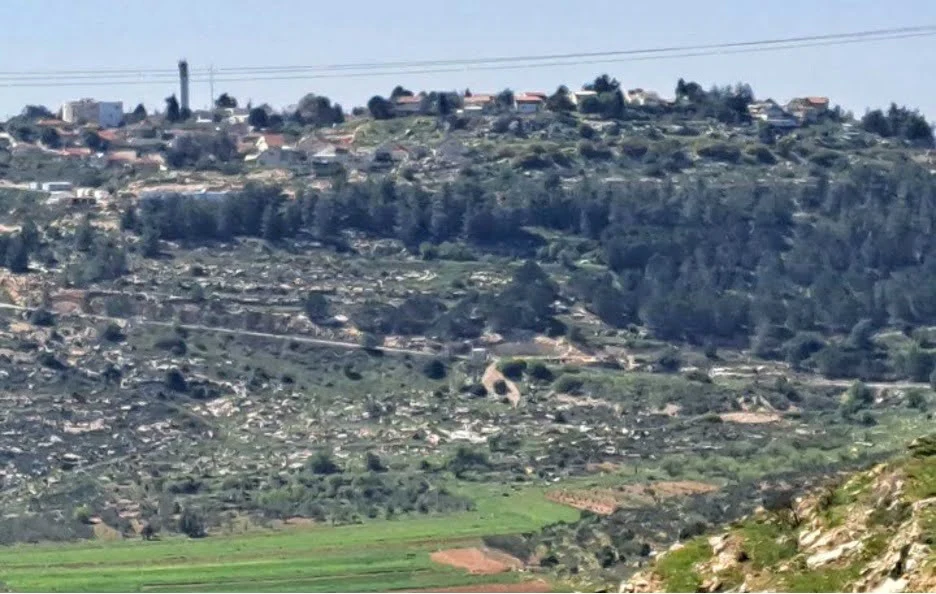
Photo: Iyad Hadad, B'tselem. Used with permission from B’tselem.
Sinjil is a once beautiful town in the Palestinian hills northeast of Ramallah.
Long known for its gardens and fig trees, it is now surrounded by five settlements, and
much of its farmland has been severed from the village. Settler attacks are common,
and families often feel under siege.
 American killed -
Saif (Sayfollah) Musallet of Tampa,
Florida, was killed in the village of Sinjil on July 11,
2025. The 20-year-old American citizen was beaten to
death by Israeli settlers while visiting his family's land in
the Baten al-Hawa area of the village. According to
eyewitnesses, he was beaten with clubs and kicked for
three hours while an ambulance was prevented from
reaching him. During part of that time, Israeli soldiers
stood by and watched. When the ambulance was finally
allowed through to collect his body, settlers smashed its
windows with bats and threatened the driver.
American killed -
Saif (Sayfollah) Musallet of Tampa,
Florida, was killed in the village of Sinjil on July 11,
2025. The 20-year-old American citizen was beaten to
death by Israeli settlers while visiting his family's land in
the Baten al-Hawa area of the village. According to
eyewitnesses, he was beaten with clubs and kicked for
three hours while an ambulance was prevented from
reaching him. During part of that time, Israeli soldiers
stood by and watched. When the ambulance was finally
allowed through to collect his body, settlers smashed its
windows with bats and threatened the driver.
Saif grew up in Charlotte County, FL, and worked at an ice cream shop in Tampa with
his father. He still has family members in both places who are deeply affected by his
loss. He was spending time during the summer visiting family members who live in the
occupied West Bank. No one has ever been held accountable for this crime. See more
on the attack and killing here.
 Home vandalized, trees cut -
Dr. Nida Sahouri Ali is a clinical pharmacist in
the Chicago area and an American citizen. She and her husband own a house in Sinjil,
which belonged to his parents. Trees throughout the village have been destroyed by
illegal settlers. All the family’s trees have been cut, including 18 olive trees, 2 lemon
trees, apricot, fig, and berry trees.
Home vandalized, trees cut -
Dr. Nida Sahouri Ali is a clinical pharmacist in
the Chicago area and an American citizen. She and her husband own a house in Sinjil,
which belonged to his parents. Trees throughout the village have been destroyed by
illegal settlers. All the family’s trees have been cut, including 18 olive trees, 2 lemon
trees, apricot, fig, and berry trees.
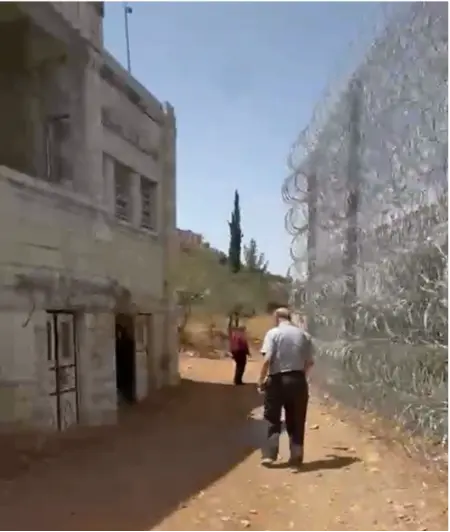
Israelis have built a wall and fence around
the village two stories high, which cuts
right by the Ali family’s house and across
the driveway, blocking any entrance to the
property by car. To reach the house now,
the family has to travel over the hills and
come down the side of a mountain by
foot. As a result, their home has
effectively been taken from them. The
siege of the village is blocking commerce
and travel for all the villagers.
 The only two entrances to the village can be closed at any time, often leaving families waiting at
the checkpoints to get home or to school, doctor appointments, etc.
The only two entrances to the village can be closed at any time, often leaving families waiting at
the checkpoints to get home or to school, doctor appointments, etc.
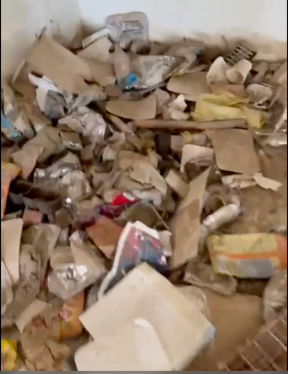
Israeli soldiers occupied the family’s home for a time and destroyed everything inside the house.
They threw food and possessions all over the ground. According to Dr. Ali, this was done with no
provocation on the family’s part. The house was damaged simply because it belonged to
Palestinians. More information on settler violence against Sinjil is in a
film by the Israeli human rights organization B’tselem.
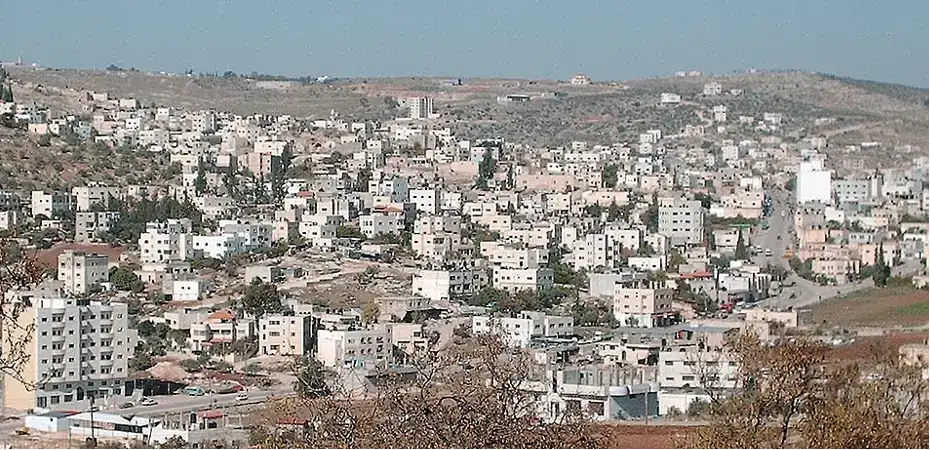
Photo from Mapcarta. Producer: public domain
The town of Tayasir is in the northeastern part of the West Bank. A settlement
established there is illegal, even according to Israel, but it is defended by Israeli soldiers
who ignore their attacks on local residents.
American reporter attacked -
Israeli soldiers attacked a CNN crew on March 27,
2026, while they were there to report on the settler violence. US Citizens, including
Jeremy Diamond, were among the crew who were assaulted and later detained by
Israeli soldiers, who often arrest the victims of settler violence. The attacks, revealing
comments of the soldiers about taking over the West Bank, and the statement from
Jeremy Diamond can be viewed here.
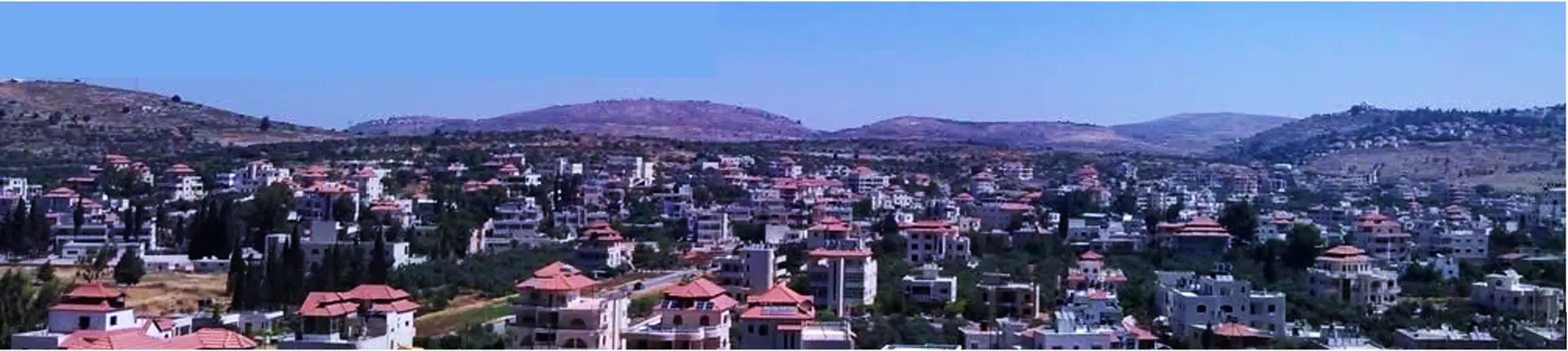
Taybeh is the last remaining all-Christian town in the West Bank. It is an ancient village dating from the time of Christ, the place where Jesus went to rest shortly before his passion (John 11:54). Taybeh has about 1,500 inhabitants, including US citizens, and three churches. It is located 30 km north of Jerusalem and east of Ramallah and is built around the ruins of the 5th Century Cathedral of St George, where continuous services have been held for hundreds of years. It is also famous for its brewery and winery which exports to the US and other countries. The brewery founders, the Khoury family, are US citizens, as are many inhabitants of the town. The village of Taybeh has been attacked repeatedly by illegal settlers seeking to drive Christians from the area. Many of the town’s residents have moved to the US but still have property and families in the area who are affected.
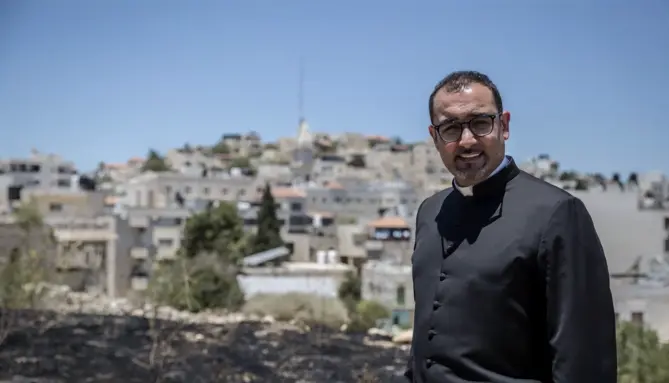
Fires set - In early July 2025, a group of Jewish settlers set fires near the Byzantine Christian cemetery and at the Church of Al-Khader (St. George), dating back to the 5th century and one of the oldest and most venerated places of worship for Christians in Palestine. These arson attacks follow a series of violent acts against the town’s Christian residents. The settlers have also damaged olive groves, Taybeh’s primary source of income, and are preventing farmers from accessing and working their land.
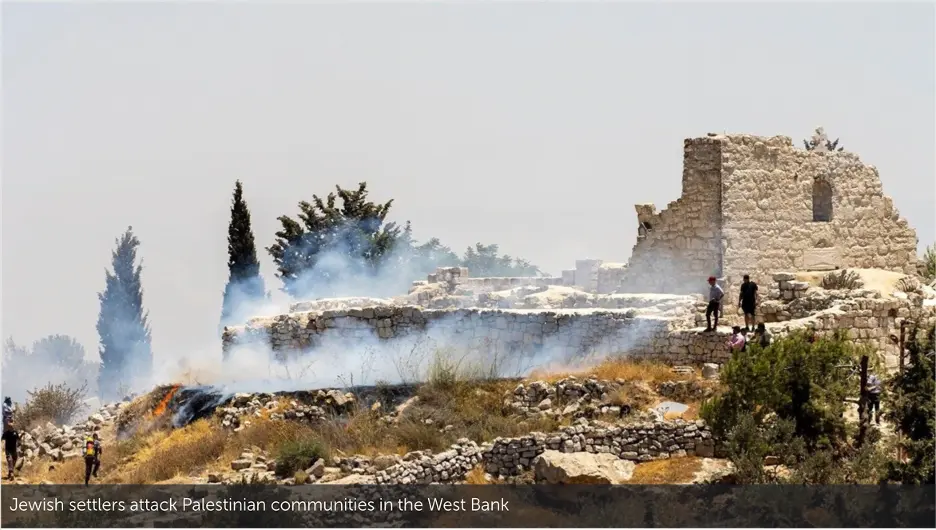
Photo courtesy of the Higher Presidential Committee for Christian Affairs
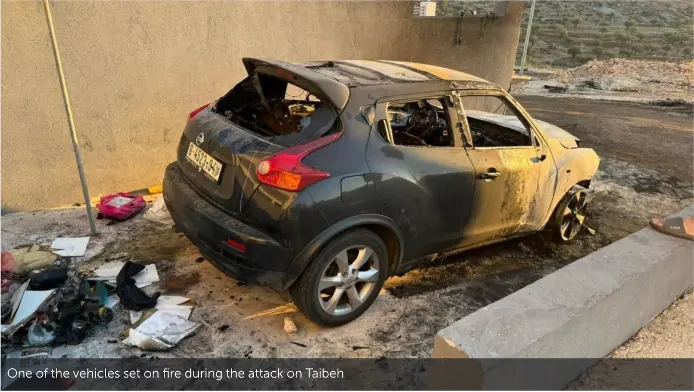
Homes and cars burned - On July 28, 2025, settlers returned to Taybeh, attempting to break into homes and setting fire to cars.
Horses stolen -
On the afternoon of February 28, 2026, a group of settlers entered the town, threw stones at
homes, and blocked roads. The settlers trespassed on land belonging to the Khouryeh family and
stole a horse and a foal valued at $10,000 from the property. Two brothers of the horse owners are
US citizens. According to local accounts and the Latin parish priest, the Israeli army and police
arrived at the scene but, instead of stopping the theft, provided protection for the settlers and
escorted them out of the village with the stolen animals.
Factory and quarry seized -
Father Bashar Fawadleh issued an urgent appeal on Saturday, March 21, telling news agencies that
more private lands belonging to the people of Taybeh had been seized that week by Israeli
settlers. He also reported that Israeli settlers have seized areas near the village’s quarry and
cement factory. The quarry has been owned for 20 years by Taybeh resident Roland Bassir. Now that
Israeli settlers have taken control of the area, they have threatened him with violence if he
comes to work in the quarry. It is the only source of livelihood for Bassir, his brother and their
families. Witnesses said the settlers had raised an Israeli flag on top of the cement factory.
American family’s livelihood ruined -
The Khoury family of Boston, who are dual US and Palestinian citizens, own a brewery in Taybeh,
which has drawn tourists to the Holy Land for years. An Octoberfest each year was a special
attraction. The settler attacks and military barriers have effectively stopped tourism to the
town, affecting the family’s livelihood. Long lines at checkpoints and closures make it difficult
to get the family’s beer, wines, and olive oil to market.
Turmus Ayya is a beautiful town in the countryside about 25 miles
north of Jerusalem. 85% of Turmus Ayya's population are Palestinian American
citizens. Every summer, these dual nationals return to visit their families and
maintain
ties with their native land. Many Americans have built beautiful homes in the area, and a
number have been vandalized or destroyed by illegal settlers.
American’s village attacked during visit -
Rep Abdelnasser Rashid was born in
Chicago. He is Illinois’ first Palestinian American elected to the Illinois state legislature.
He holds a Bachelor of Arts from Harvard University and a Master of Business
Administration in Finance and Economics from the University of Chicago's Booth School
of Business. His family is from Turmus Ayya in the West Bank. In June 2023, Rashid was visiting
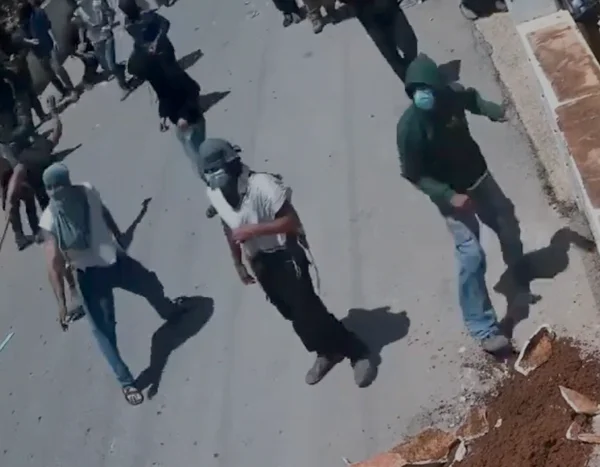
family there with his wife and three children when a violent mob of settlers descended on the
town, firing guns and frightening residents. Rashid said he was inside his childhood home at the
time of the attack. "I didn't know whether we were going to be killed," Rashid told
a
reporter. "My daughter, 7 years old, was clinging to me, saying, 'Dad, what do we do if
we
get shot?'" One Palestinian was killed and a dozen others were injured, with
approximately 30 houses and 60 cars set on fire.
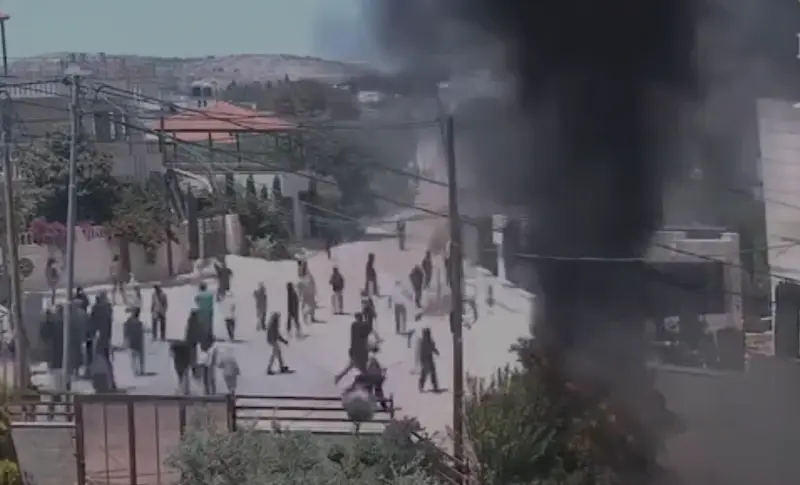
Below: Masked settlers descending on the village of Turmas Ayya in June 2023; Smoke rising from burning homes torched by settlers. Credit: B’tselem, the Israeli human rights organization
American reporter attacked -
In October 2025, American journalist Jasper
Nathaniel, was chased and attacked by Israeli settlers in the occupied West Bank
for recording an incident of Israeli settler violence on an
elderly Palestinian woman. Nathaniel says the U.S. Embassy refused to help him.
Video of the encounter is here.
American’s car smashed -
Yaser Alkam is an American citizen who was in Turmas
Ayya during the incident described above. Here is his account to The Hill, a publication
based in Washington, DC: “It was Oct. 19, the first day of the olive harvest in Turmas
Ayya in the occupied West Bank. I was driving back from my olive grove toward town,
when 10 or more Israeli settlers swarmed my car, smashing it with rocks and clubs. I
heard the back windshield shatter as I tried to drive away. ‘Today is the day we die,’ I
thought.
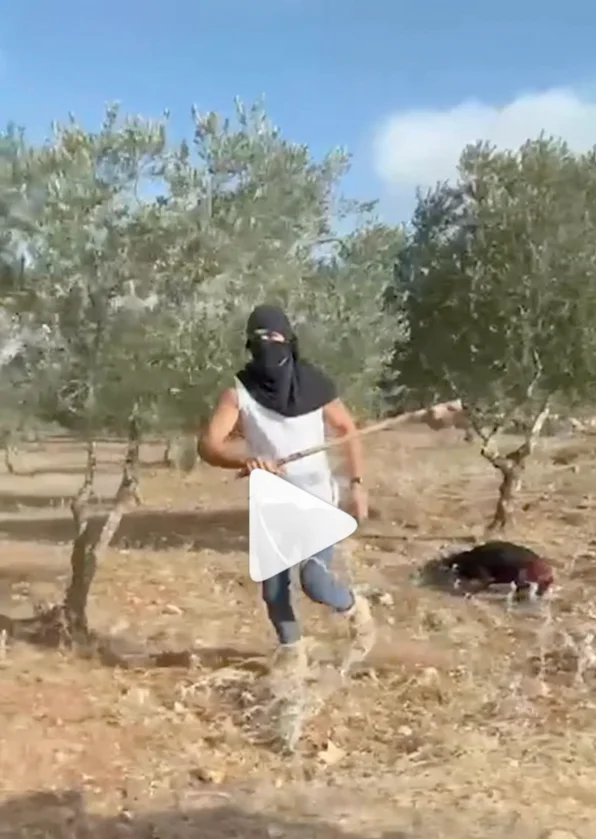
Photo from B’tselem of settler who beat woman.
One settler, with his face
covered by a black scarf,
wielding a wooden club, ran
past my passenger window
towards an older woman on
the side of the road. He
swung the club down on her
head, and she crumpled to
the ground, unconscious. He
struck her on the head again
and again. He then ran with
his club raised towards two
European activists who were
there to try to support us
during what has become an
annual surge in settler attacks
during harvest season.
I continued to drive as people fled the settlers in every direction. After making it home, I
couldn’t shake the image of the settler hitting the woman. I later learned that she was
taken to hospital and spent four days in intensive care.”
Another American’s home attacked, car burned -
Sam Aziz is an American citizen
who lives in Dallas, TX. He has shared an incident of Israeli settler violence that he
experienced while visiting the West Bank in the summer of 2023:
“During the visit, my family, a few cousins and I were staying at my grandpa’s house in a
village called Tormos Ayya (sic). During one of the afternoons, a cousin of mine, noticed
a mob of Israeli settlers that was throwing rocks and setting cars on fire not far from my
grandpa’s house. I quickly barred the door to my grandpa’s house, and everyone in the
house, including my wife, kids and cousins, went to the basement of the house and we
also barred the door leading to the basement.
We huddled in the basement for a while, all the while hearing rocks being thrown at the
house, shots being fired, expecting that at any minute the mob would gain entry into the
house and the basement. I held a broom in my hand, as I wanted anything at-hand with
which I could defend myself and family. Out of one of the basement windows, we
started seeing black smoke billowing above our house. We realized the Israeli settler
mob was trying to burn the house, with us in it.
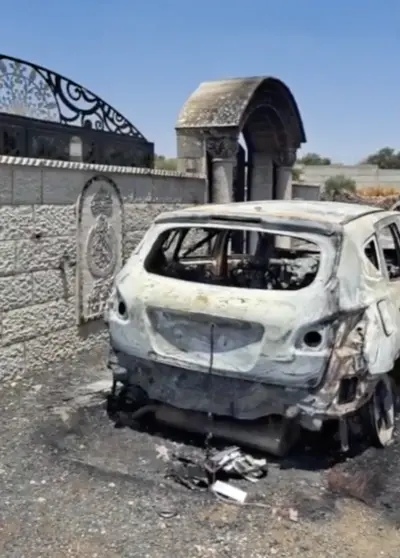
Car burned in Tumus Ayya.
I eventually went back to the house after the violence of the Israeli settlers subsided. I witnessed so much destruction. My car was aflame and burning into a husk. The windows of the first floor of the house were shattered. It took us weeks of cleaning until all the shards of glass were removed, some of which made it into our feet for the duration of our stay. There were scorch marks on the walls of the balcony. The settlers apparently ignited a couch that was in the balcony and near a window into the living room. Some village men were able to extract the couch before it led to a larger inferno.”